

Destination
Namibia
Why visit?
Why visit Namibia?
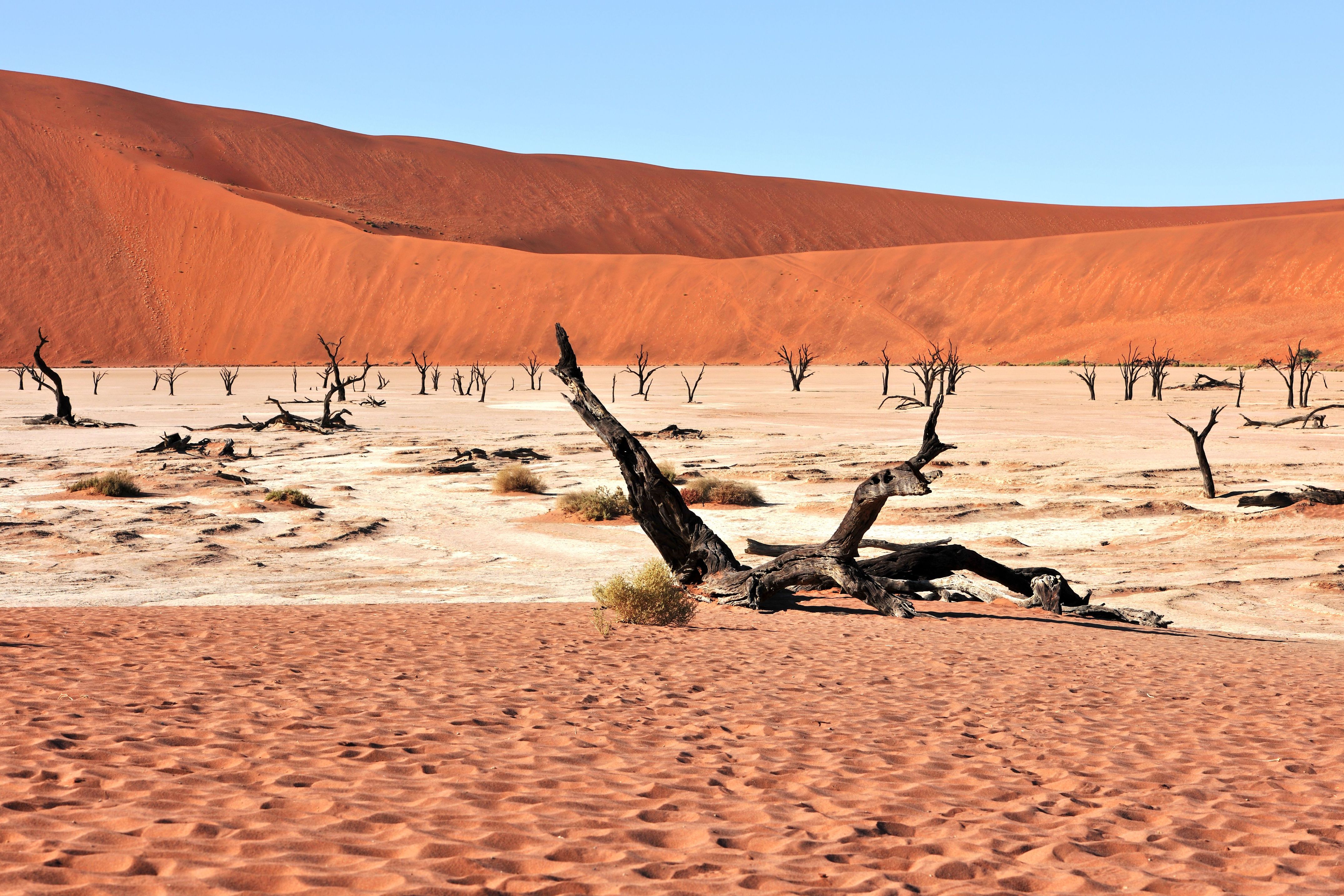
Namibia doesn't fill silence, it lets it stand. At Sossusvlei, dunes the colour of rust rise higher than almost anywhere else on Earth, casting shadows so sharp they look drawn by hand. Further north, the Skeleton Coast holds the wrecks of ships that never found their way out, fog rolling in over a shoreline the San people once called "the land God made in anger." Inland, Etosha's vast white pan draws wildlife to its edges in a way that makes waiting, quietly, from a single waterhole feel like the whole point of being there. This is not a place to be filled with activity. It rewards those willing to drive its distances themselves, or land by charter into a camp with nothing around it for a hundred miles, and simply let the space do the work.
Unique
What makes Namibia unique
- Sossusvlei - Climb Big Daddy, one of the world's tallest dunes, as the sunrise turns its ridges deep red, then descend into Deadvlei, where centuries-old camel thorn trees stand black and petrified against a stark white clay pan, a landscape so still it barely looks real.
- Skeleton Coast - A shoreline littered with the wrecks of ships that never made it out, home to colonies of Cape fur seals and one of the only places on Earth where elephants have adapted to survive on almost no water at all. Reached almost exclusively by light aircraft, into camps with nothing else around for miles.
- Etosha National Park - A vast, shimmering salt pan draws wildlife to its edges from every direction. From a floodlit waterhole after dark, watch black rhino and elephant herds come to drink just metres away, one of the most reliable wildlife encounters anywhere in Africa.
- Damaraland - Home to more desert-adapted rhino and elephant, moving across a landscape that seems too harsh to support them. At Twyfelfontein, a UNESCO World Heritage Site, ancient rock engravings record thousands of years of human presence here, while visits with the Himba people offer a rare window into one of Africa's last truly traditional ways of life.
Getting there
How to get there
Fly into Windhoek Hosea Kutako (WDH), most commonly through Frankfurt, Johannesburg, or Addis Ababa, each offering a direct final leg into Windhoek. From there, explore by self-drive 4x4 or fly-in charter to Sossusvlei, Swakopmund, and Damaraland. Leshy arranges both private charters and fully planned luxury self-drive itineraries, whichever suits the way you'd rather experience the distances.
Seasons
When to visit
May - October brings Namibia's dry, cool season: prime conditions for game viewing, as wildlife concentrates around Etosha's waterholes, and the clear light and dramatic skies photographers favour most. November - April turns the landscape green, draws lesser and greater flamingos to Walvis Bay's lagoon in their thousands, and brings newborn wildlife across the country's parks, a quieter, more atmospheric season for those willing to trade dry-season crowds for lush scenery and dramatic afternoon storms.
Prime locations
Where to go
- Sossusvlei & Deadvlei Iconic red dunes, ancient clay pans, sunrise climbs, stargazing.
- Etosha National Park Vast salt pan, floodlit waterholes, rhino, massive herds.
- Skeleton Coast Shipwrecks, seals, desert elephants, fly-in luxury camps.
- Damaraland Desert rhino/elephant tracking, Twyfelfontein rock art, Himba culture.
Get inspired
Journeys in Namibia
Enquire